Combining senior housing that is affordable with easy access to medical and social services is not an easy feat. In some areas, seniors don’t have transportation or funds to receive proper medical care, so they use the local ER as their primary health service provider. Medical care can be a problem for anyone, but especially for senior citizens with limited resources.
Share
Although more than half of all Americans own smart phones, only 18% of older adults own one. However, some 77% of older individuals do own a cell phone. The cell phones they choose are just basic devices with large buttons and limited features. This fact, though, doesn’t mean that cell phone usage is only for the young. It simply means that cell phones are utilized differently by the older generation. While they are the lifeblood of the younger crowd, older adults see them as tools of communication only.
Share
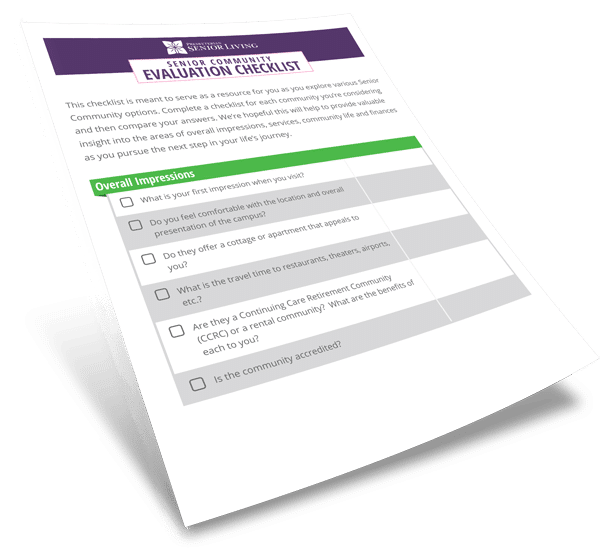
Subscribe to the Presbyterian Senior Living blog and receive our free Community Evaluation Checklist to ensure you ask what’s most important to you.
Most of us have fond memories of our grandparent’s homes growing up. We remember spending the lazy days of summer with them, working in their garden or helping them with household chores. More than anything else though, we remember the time and attention they gave us, mostly because they were able. While our parents were busy working to provide for our needs, they gave us their undivided attention, which to a child is worth more than gold. While families create meaningful moments with their loved ones, there is a vast opportunity for children to learn and grow while visiting their older relatives at a senior living community.
Share
As senior care providers across the United States begin to focus more on creating friendly, more homelike environments for aging seniors, the need to build trusted community partnerships becomes imminent. It takes a team of multidisciplinary health care professionals to meet the needs of the aging population. But with the population of those age 65 and older projected to reach 83.7 million by 2050, according to the United States Census Bureau, will health care professionals be able to keep up?
Share
Caregiver Support | Health & Aging
Parkinson’s disease is a brain disorder that causes tremors, balance problems and changes to gait and speech. About 1.5 million Americans currently suffer from the disease, and some 60,000 new cases are diagnosed every year. The condition most often strikes seniors, affecting about 18 out of every 1,000 people over age 65.
Share
Do you need a little sunshine in your life? At Presbyterian Senior Living, our residents make every day brighter with their caring, selfless devotion to others. Through their actions, we are continually inspired. Here are two stories of residents who are making life a little sunnier for others with their resident-led projects.
Share
.svg)
